Innovate
Part 1: How Agentic AI Is Reshaping Brand Strategy
Tags:
Beyond the buzzwords
Picture launching a marketing campaign that doesn’t just run—it evolves, learns, and actually gets better at understanding your customers with each interaction. It spots opportunities you’d miss, adapts to changes in real time, and works tirelessly to amplify the authentic connections you’ve worked so hard to create between your brand and the people who will genuinely value what you offer.
This isn’t science fiction. It’s the creative and cultural renaissance that agentic AI is creating for forward-thinking marketers today, a renaissance where technology amplifies human insight rather than replacing it, where truth becomes the ultimate competitive advantage, and where brands finally have the tools to find their perfect audience.
If you’ve been following marketing technology trends, you’ve likely encountered a confusing alphabet soup of AI terminology: LLMs, AGI, generative AI, and now agentic AI. While these terms are often used interchangeably, taking the time to understand their differences unlocks extraordinary possibilities for how we connect with customers.
Think of it this way: If traditional AI tools are like having a very sophisticated calculator, agentic AI is like having a dedicated creative partner who can solve the problems, explain the patterns, and act on the insights that amplify your human judgment rather than replace it. The difference isn’t just technical; it’s the foundation of a marketing revival where authentic brands can finally connect with customers who truly appreciate their unique value.
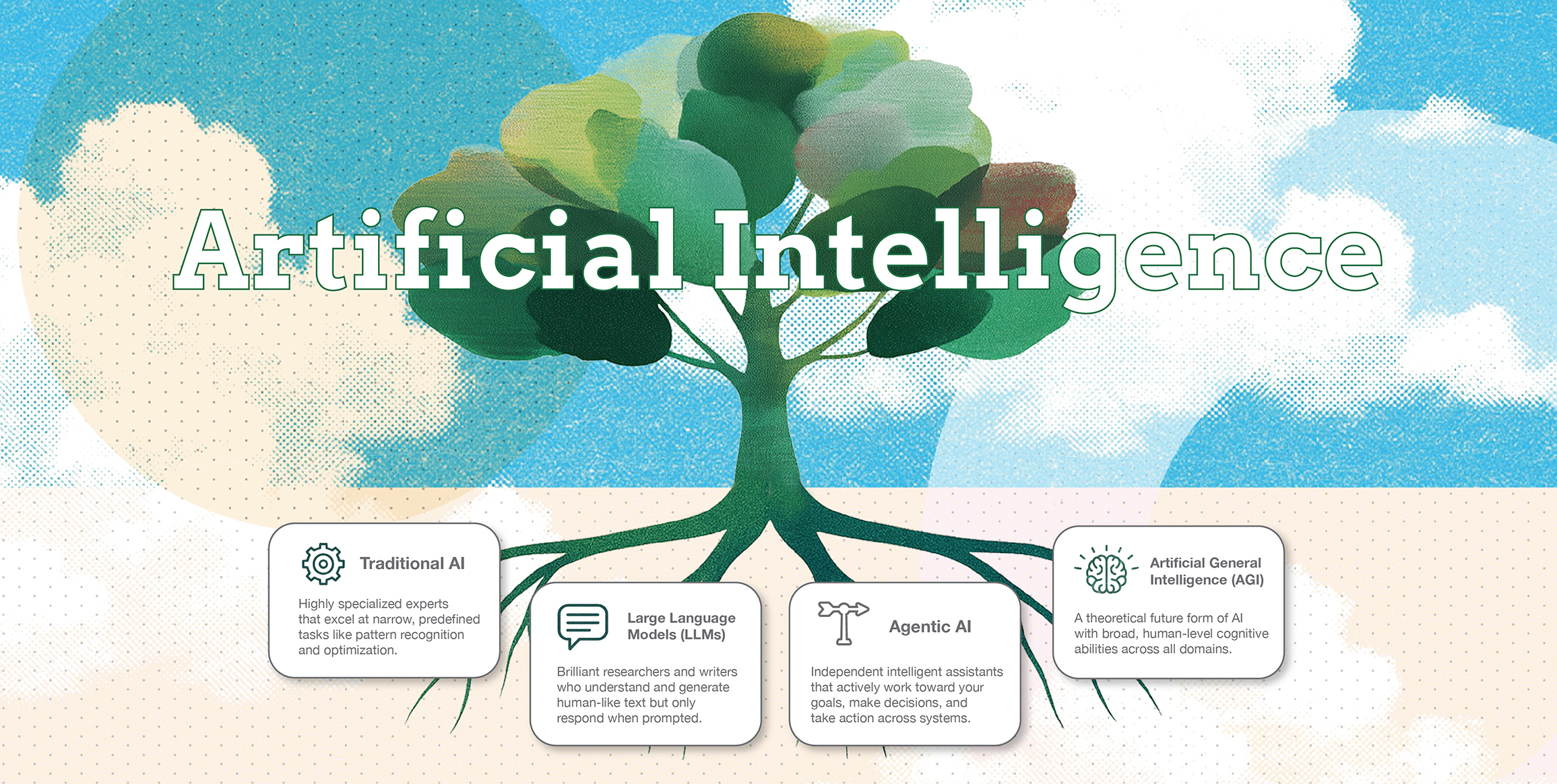
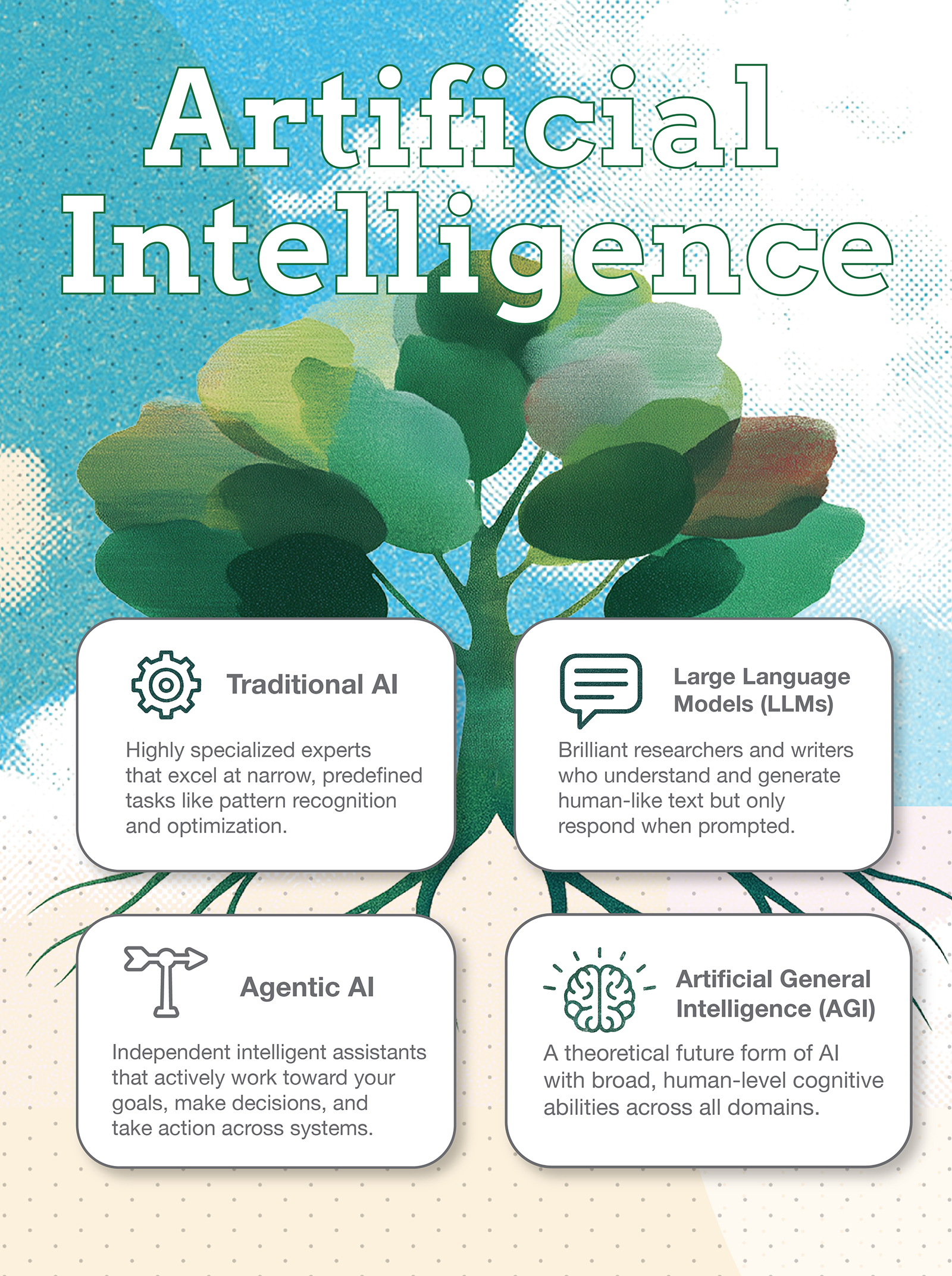
Understanding the AI family tree
The foundation
Traditional AI systems are like highly specialized experts who excel at specific tasks. They can recognize patterns, make predictions, and automate processes, but they operate within narrow, predefined parameters. In marketing, these systems have been successfully used for tasks like:
- Email send-time optimization
- Basic customer segmentation
- Simple recommendation engines
- Automated bidding in advertising platforms
Large language models (LLMs)
LLMs such as ChatGPT-5 or Claude are like having access to a brilliant researcher and writer who has read virtually everything ever written. They excel at understanding and generating human-like text, but they’re primarily reactive, responding to what you ask them, and don’t initiate actions or make independent decisions.
Think of an LLM as an incredibly knowledgeable colleague who can help you craft copy, analyze customer feedback, or brainstorm ideas, but who waits for you to ask the right questions and give them specific tasks.
Artificial general intelligence (AGI)
AGI represents the theoretical future where AI systems can match or exceed human cognitive abilities across all domains. We’re not there yet, and experts debate whether we’re years or decades away from achieving true AGI. For marketers, AGI remains more of a long-term consideration than a current strategic priority.
Agentic AI
Empowering capabilities beyond LLMs, agentic AI systems are like having a team of intelligent assistants who can work independently toward goals you set for them. They can:
- Make decisions based on changing circumstances
- Take actions across multiple systems and platforms
- Learn from outcomes and adjust their approach
- Coordinate with other AI agents to accomplish complex tasks
- Operate continuously without constant human oversight
The key difference is autonomy and goal-oriented behavior. While an LLM waits for your next prompt, an agentic AI system actively works toward objectives, making decisions and taking actions along the way.
Current AI success stories in marketing
Before we explore the extraordinary potential of agentic AI, let’s celebrate how AI is already transforming marketing in remarkable ways.
Content creation and optimization
AI-powered content tools have revolutionized how teams approach content creation, helping marketers generate everything from social media posts to email campaigns with unprecedented speed. Companies are reporting 3-5x faster content production while maintaining—and often improving—quality standards. For example, McKinsey estimates generative AI can unlock the equivalent of 5–15% of total marketing spend in productivity gains, with Michaels seeing a 41% lift in SMS CTR and 25% higher email CTR from AI-assisted workflows. Accenture reported its AI-enabled content supply chain cut 55% of manual steps and delivered $70M in annual savings. And according to HubSpot, marketers now save an average of 1–2 hours per day using AI in content operations—good proof that the gains aren’t just theoretical.
This means more time for strategy and creativity, and less time spent on repetitive writing tasks. Importantly, these tools augment human creativity rather than replace it. The strategic thinking, brand voice, and emotional intelligence still come from human marketers.
A Renaissance example: Anna’s Coffee Roasters
Consider Anna’s Coffee Roasters (ACR), a fictional artisanal coffee company that will appear throughout this series as an example of how this transformation unfolds. ACR sources beans directly from farmers and maintains deep relationships with its local community. With traditional marketing, ACR struggles to reach coffee lovers who would appreciate their craft and values. Their authentic message gets lost in the noise of big-budget competitors.
But in the emerging agentic AI landscape, ACR’s story transforms dramatically. Their AI systems understand exactly what makes them unique: ACR’s 20-year relationships with specific farms, their commitment to paying farmers 40% above fair-trade prices, and the distinctive flavor profiles that come from their patient, small-batch roasting process.
This is where truth becomes ACR’s competitive advantage. Unlike larger competitors who might claim “artisanal” processes they don’t actually practice, ACR’s authenticity becomes instantly verifiable and powerfully amplified by AI systems that can validate their claims against their actual practices.
Meanwhile, coffee enthusiasts, who value sustainability, appreciate craftsmanship, and seek brands that align with ACR’s ethical commitments, have AI agents that recognize ACR as the perfect match. The technology doesn’t replace human judgment but amplifies the authentic connections that already exist, helping truthful brands find their ideal customers with unprecedented precision.
Agentic AI in action
Predictive analytics and customer insights
Companies across all industries are implementing tools that help marketers predict customer lifetime value, identify churn risk, and optimize lead scoring. These applications have proven particularly valuable for B2B companies looking to prioritize sales efforts. Salesforce Marketing Cloud’s Einstein module already powers Engagement Scoring and AI-driven send-time optimization. HubSpot offers predictive lead scoring, using machine learning to predict likelihood-to-close within 90 days, illustrating how these capabilities are now mainstream.
Automated advertising optimization
Google’s Smart Bidding and Facebook’s automated ad placement have shown how AI can optimize advertising spend in real-time, often outperforming human-managed campaigns by 20-30% in efficiency metrics. Case studies show real-world lifts: Google’s Performance Max campaigns delivered +60% conversions and +59% revenue for Rothy’s, while discovery+ saw 17% incremental subscribers at –21% CPA, and ManyPets achieved +27% sales and 2× ROAS. Similarly, Meta’s Advantage+ Shopping Campaigns cut acquisition costs with a median 17% lower CPA across EMEA.
Customer service enhancements
Chatbots and virtual assistants have evolved from simple rule-based systems to sophisticated AI-powered conversational agents that can handle complex customer inquiries, reducing response times and improving satisfaction scores.
In one McKinsey case, AI deployment reduced time to first response by 80% and cut average handle time by four minutes. Zendesk’s 2024 CX Trends report also found AI-powered self-service drove measurable gains in customer satisfaction and deflection rates.
What Makes Agentic AI Different
Proactive problem-solving
Traditional AI systems are reactive—they respond to inputs and execute predefined tasks. Agentic AI systems are proactive, continuously monitoring for opportunities and challenges, taking intelligent action without waiting for human instruction.
Imagine this: Your marketing system notices a sudden spike in negative sentiment around your brand, automatically investigates the root cause, drafts potential response strategies, and even begins implementing crisis communication protocols while alerting your team to the situation. But here’s the crucial difference from scary science fiction scenarios: The AI agent doesn’t make the final decisions about messaging or strategy. Instead, agentic AI increases your team’s ability to respond quickly and thoughtfully, presenting options that align with your brand’s authentic voice and values.
It’s like having a vigilant marketing partner that enhances human judgment rather than replacing it, one that helps you stay true to your brand’s authentic character even under pressure.
Cross-platform coordination
The breakthrough comes when AI systems can orchestrate activities across your entire marketing ecosystem. While traditional AI tools typically operate within single platforms, agentic AI can coordinate actions across multiple platforms simultaneously. This unlocks possibilities for truly integrated campaigns that adapt and respond as a unified whole.
Your AI agent might detect a trending topic, adjust your social media strategy, modify your email campaigns, and update your website content, all in perfect harmony in response to a single market opportunity. Most importantly, these adjustments amplify the brand voice and strategic direction that human marketers have established, rather than creating generic responses.
Returning to our Anna’s Coffee example: When a major news story breaks about unfair labor practices in coffee farming, ACR’s AI systems could automatically adjust their messaging to highlight the company’s direct relationships with farmers and their above-fair-trade practices. The AI doesn’t create this positioning, it intensifies ACR’s existing authentic advantages at precisely the moment when that truth becomes most relevant and valuable.
Continuous learning and adaptation
Agentic AI systems don’t just follow instructions; they learn from outcomes and continuously refine their approach. If a particular messaging strategy isn’t resonating with your audience, the system will test alternatives and gradually shift toward more effective approaches.
Goal-oriented decision making
Perhaps most importantly, agentic AI systems can make complex decisions in service of higher-level goals. Instead of just executing tasks, they can evaluate trade-offs, prioritize actions, and even recommend strategic pivots based on changing market conditions.
Early applications of agentic AI in marketing
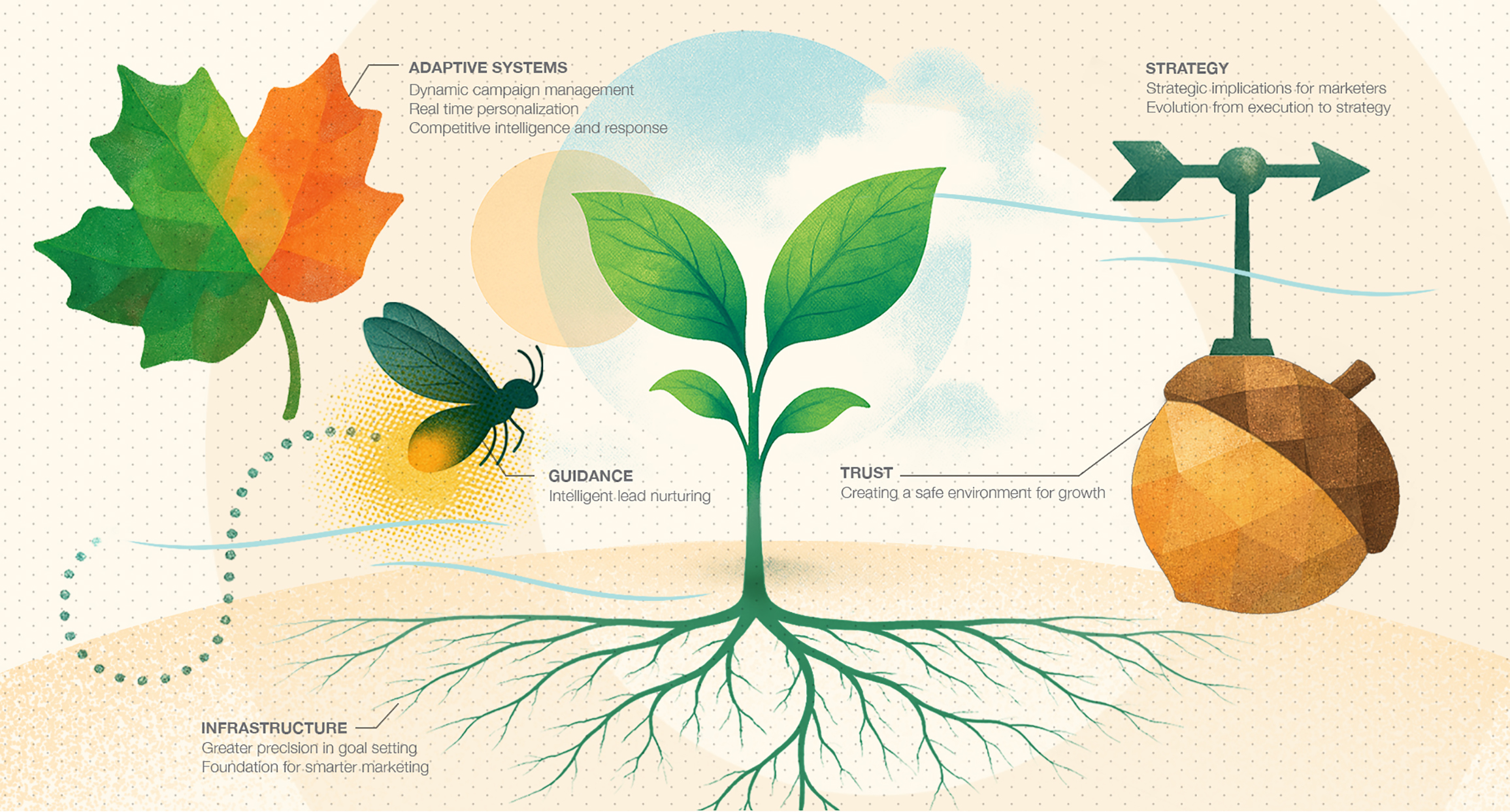
Dynamic campaign management
Early adopters are experimenting with agentic AI systems that can manage entire marketing campaigns with minimal human oversight. These systems monitor performance metrics, adjust creative elements, reallocate budget across channels, and even pause underperforming campaigns automatically.
Intelligent lead nurturing
Some companies are testing agentic AI systems that can guide prospects through complex sales funnels, personalizing the journey based on individual behavior patterns and engagement levels. These systems can decide when to send follow-up emails, which content to share, and when to alert human sales representatives.
Real-Time Personalization
Beyond static personalization, agentic AI can create dynamic experiences that adapt in real time, based on user behavior, external factors like weather or news events, and broader market trends. IBM and The Weather Company demonstrated this with McCormick: Weather-triggered ads increased unaided awareness by 15.7% and boosted brand favorability by 10%.
Competitive intelligence and response
Advanced agentic AI systems can monitor competitor activities, analyze market changes, and automatically adjust pricing, positioning, or promotional strategies in response to competitive moves. For example, Boston Consulting Group highlights AI-powered pricing as a performance lever, and TIME reports quick-service chains like Wendy’s are piloting dynamic pricing—adjacent operational shifts that marketing agents will soon coordinate with.
Strategic implications for marketers
We’re witnessing a reimagining of how marketing teams operate, and the possibilities are extraordinary. This isn’t about AI taking over marketing, it’s about AI strengthening what makes marketing most human: creativity, empathy, and authentic connection.
Harvard Business Review argues personal AI agents will soon act as shopping concierges, mediating discovery and choice. Reuters reports that Perplexity AI has already integrated PayPal, enabling assistants to complete purchases, not just recommend them.
Meanwhile, Similarweb data shows organic traffic to news sites has fallen 26% since Google launched AI Overviews, and the Financial Times warns of a coming “Google Zero” era, where queries resolve without a click—signaling why relationships will be mediated through GenAI, not search alone.
The evolution from execution to strategy
As agentic AI systems handle more tactical execution, marketers can focus on what we do best: higher-level strategic thinking, creative direction, and building meaningful relationships. The role evolves from “doing” to “directing” and “optimizing,” freeing us to be more human, more creative, and more strategic.
Think of it like the difference between a theater director who must personally move every set piece versus one who can focus entirely on the creative vision while a skilled crew handles the execution. The director’s creativity and insight become more valuable, not less, when supported by capable agents to execute specific tasks.
Greater precision in goal setting
Agentic AI systems require clear, measurable objectives to function effectively. This is actually a gift to the marketing profession, demanding greater precision in defining marketing goals and success metrics, making us better strategists and more accountable leaders.
The foundation for smarter marketing
Forward-thinking organizations are already discovering that robust data infrastructure and connected systems unlock the full potential of agentic AI. The brands that invest in this foundation now will have unprecedented advantages in creating personalized, meaningful customer experiences.
Building trust through transparency
The brands that master ethical AI practices and transparent operations will earn unprecedented customer trust and loyalty. With greater AI autonomy comes the opportunity to demonstrate genuine commitment to customer well-being through clear ethical guidelines and thoughtful oversight mechanisms.
Pew Research recently found 57% of AI experts and 55% of U.S. adults want more personal control over AI in daily life, underscoring the consumer demand for trustworthy practices. Marketers should align with governance standards like the NIST AI Risk Management Framework 1.0 (ISO/IEC 42001:2023), and the EU AI Act (2025–26 phased enforcement), which are fast becoming the global guardrails for responsible AI use in marketing.
Preparing for the Agentic AI Future
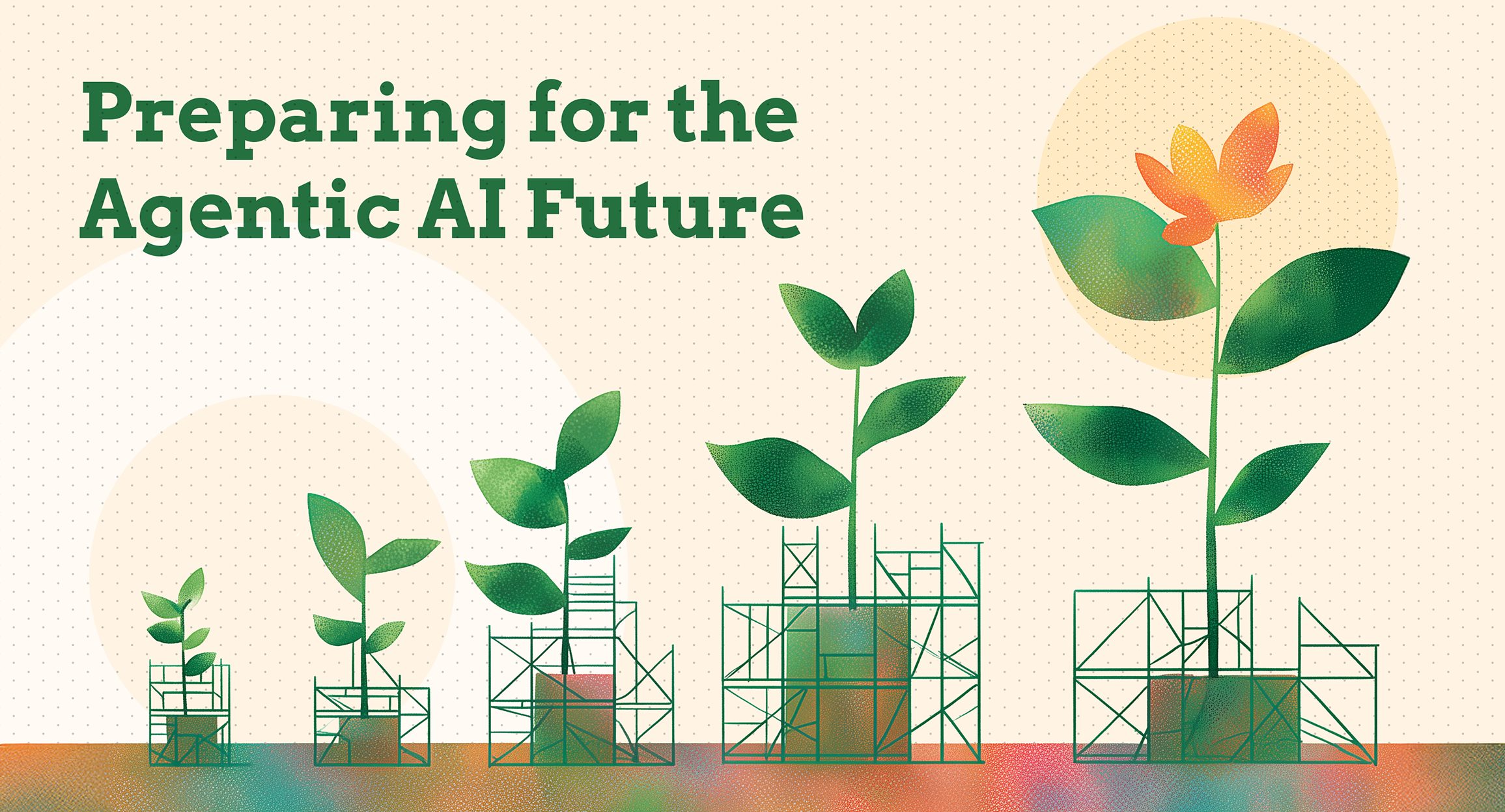
Start with clear objectives
Before implementing agentic AI, define what success looks like for your marketing efforts. What specific outcomes do you want to achieve, and how will you measure progress?
Invest in data infrastructure
Ensure your organization has clean, accessible data and integrated systems that can support sophisticated AI applications. This foundational work will determine how effectively you can leverage agentic AI.
Develop AI literacy
Build understanding of AI capabilities and limitations throughout your marketing team. This doesn’t require technical expertise, but it does require familiarity with what AI can and cannot do.
Establish governance frameworks
Create guidelines for how AI systems should operate within your organization, including decision-making boundaries, escalation procedures and ethical standards.
Start small and scale
Begin with pilot projects that demonstrate value before expanding to broader applications. This allows you to learn and refine your approach while minimizing risk.
The agentic AI marketing revolution
We’re at the dawn of a fundamental transformation in how marketing operates, and the potential is breathtaking. Agentic AI represents the evolution from AI as a tool to AI as a collaborative partner in achieving marketing objectives.
The brands that embrace this first will shape the future of how we connect with customers. In the coming months and years, we’ll see agentic AI systems that can:
- Manage sophisticated, multichannel campaigns that adapt and improve in real time while staying true to authentic brand values
- Provide strategic recommendations based on market conditions as they unfold, amplifying human strategic thinking
- Create and test breakthrough marketing approaches automatically, but always within the creative framework established by human marketers
- Coordinate seamlessly with customer service, sales, and product teams to deliver experiences that feel magical to customers while maintaining authentic brand consistency
- Anticipate and respond to customer needs before they’re even consciously expressed, but always in ways that honor human choice and agency
This isn’t about replacing human creativity and insight, it’s about amplifying what makes us uniquely human while handling the mechanical complexity that often prevents us from focusing on what matters most. As we’ll explore in the next article in this series, this transformation will empower authentic brands, making them more important than ever, not less.
Looking ahead
The foundational principles that we’ve outlined apply across industries, but their strategic implications unfold differently in various contexts. Part 2 of this series examines why AI transparency actually strengthens brand differentiation, which is particularly critical for companies where trust drives decisions and for organizations where regulatory credibility determines customer adoption.
The Foundation for Transformation
Understanding agentic AI isn’t just about keeping up with technology trends, it’s about recognizing an extraordinary opportunity to participate in a creative and cultural renaissance that transforms how brands connect with customers. As we move from reactive marketing to proactive, intelligent marketing systems, the potential for creating meaningful, personalized relationships at scale is unprecedented.
What’s most exciting about this shift is that for the first time in marketing history, we have the tools to expand human creativity and authentic brand values in ways that make every interaction genuinely meaningful. No more spray-and-pray campaigns. No more generic messaging. What’s left are authentic connections between brands and the people who will truly value the connections that technology makes possible, but human insight makes meaningful.
The articles in this series will explore why this technological foundation makes authentic brands more powerful than ever, and how the transparency AI enables becomes the ultimate competitive advantage for truthful companies. It all starts with understanding that we’re not just talking about better tools; we’re talking about a revitalization that puts human connection and authenticity at the center of everything we do.
The age of agentic marketing has begun, and the possibilities are extraordinary. The brands that shape this future will be those that see AI not as a replacement for human creativity, but as the ultimate amplifier of human insight and authentic connection.
In the next article, we’ll explore why this technological revolution will make brands more important than ever, and how companies can be positioned to thrive in this new landscape.